 Fullstacked
I build people functions that do not fall apart when you scale.
You are growing fast, or about to. The hiring, the comp, the performance, the systems, the data leadership actually trusts. I build that function from the ground up, and I build it to run without me. If it breaks the day I leave, I did not build it right.
Book a 30-minute call →Former Navy SEAL. Columbia HCM. First-ever people executive twice. Fourteen years building talent and people functions, from teaching middle school in a turnaround classroom, to running hiring at one of the largest charter networks in the country, to building the function from zero as CPO of a scaling B Corp.
What I do now.
I build and fix people functions for organizations that are scaling and cannot afford the foundation to break. Sometimes that starts with a diagnostic, a fixed-scope read of whether your people data, systems, and ownership can hold the weight you are about to put on them, AI included. Sometimes it starts with the build itself. Either way, one senior operator on the work, and the job is to leave you running without me.
Who this is for.
Founders and executives at organizations from roughly 100 to 2,500 people, scaling fast, where the people function has not caught up to the headcount. You probably need me if:
- You are growing faster than your hiring, comp, and performance systems can hold.
- You have a people team doing heroic manual work to paper over systems nobody owns.
- Finance and HR pull different headcount numbers for the same day.
- You have had payroll errors or compliance close calls nobody can fully explain.
- Someone inherited a messy HRIS and was told to figure it out.
- You are about to put AI on top of all of it and want to know if the foundation will hold.
You do not need me if your people function is already built and running clean.
The problem.
Most people functions are built in a hurry and never rebuilt. The org doubles, the systems drift, and the work that holds it together lives in a few people's heads. It runs until it does not.
Then someone decides to put an AI agent on top of it. Here is the part the demo does not show you. An agent does not clean up a mess, it commits to it. Point one at drifted field mappings, org data carrying years of quiet inconsistency, and integrations nobody owns, and it acts on all of it without hesitation. A human admin at least paused when a number looked off. The agent does not pause. The errors stop being occasional and start being constant.
Here is what is usually hiding under the dashboard:
- Field mappings drifted from their original intent across admin transitions.
- Org structure data carrying years of accumulated inconsistencies.
- Integration jobs running with no notification and no named owner.
- Workflows depending on tribal knowledge that walked out when a key admin left.
- Reporting pulling from sources that quietly disagree.
None of it shows on the executive dashboard. All of it surfaces the moment the org scales, or an agent acts on it.
How it works.
Three phases, one progression. Most start at the diagnostic and decide from there.
Diagnose
I map what is actually happening versus what leadership thinks is happening. You get a receipts-based report that names every failure point, ranks it by payroll and compliance exposure, and sets the order to fix it. Even if we never work together again, the map is yours to keep.
Build
If the gaps warrant it, I fix them. Process redesign, system reconfiguration, SOP build, governance handoff. You own the system when I leave. Not me.
Hold
The retainer keeps your standards held as the system changes. Monitoring, a monthly health check, governance enforcement. It is there if you want it, never because you are stuck with me.
What the diagnostic examines.
When the work starts with a diagnostic, three layers get tested.
Data Integrity
Are the fields an agent, or a report, would read trustworthy? Field mapping, validation rules, source-of-truth ownership, reconciliation paths.
Integration Reliability
Can inputs and outputs be trusted to fail loudly instead of silently? Job ownership, notification configuration, dependency mapping, monitoring.
Human Review and Ownership
When the system makes a recommendation, who reviews it and how? Escalation paths, decision logs, control points, named ownership.
What you walk away with.
- A receipts-backed assessment of each layer, with named failure points.
- A prioritized risk register tied to payroll, compliance, and reporting exposure.
- A 30-60-90 stabilization sequence.
- Named ownership recommendations for every control point.
- A go or no-go signal for any agent or automation deployment currently under consideration.
No 40-slide deck. No platitudes. Receipts.
One pattern, so you know the work is real.
Names redacted. The pattern is common. If it sounds like your system, it probably is your system.
A termination workflow that paid people after they left.
The surface symptom was recurring payments that kept firing after assignments had ended. Root cause: the termination process defaulted to leaving recurring pay active unless someone manually turned it off, and the manual step rarely happened. I built an admin-initiated termination workflow with manager approval gates, automated inactivation of recurring pay, and named ownership for every step. The single most important payroll control point moved from manual to automatic. Future leakage prevented by design, not by somebody remembering.
What I have built.
Teach For America
I started in the classroom, three years teaching middle school at a Glendale school flagged for turnaround. Then I helped build TFA's first-of-its-kind initiative to recruit military veterans into education, and co-authored the rubric that taught reviewers how to read a veteran's record fairly.
Success Academy
I ran hiring at one of the largest charter networks in the country against a 1,000-hire annual goal, out of a pipeline of tens of thousands. I built the reporting layer that made our recruiting data tell the truth. And I founded and led the veteran hiring initiative that brought roughly 40 veterans and military spouses onto staff in its first year. The New York Post covered it. The CEO wrote about it and named me as the person who led it.
Seton Education Partners
I built the recruiting operation across a multi-state school network, designed the salary scale, stood up the engagement and performance cadence, and grew and developed the team. When I left after five years, it kept running under the people I had built. That is the tell. If it falls apart when you walk, you did not build it right.
Practice Benefits Corp
A B Corp that went from 65 to 378 people in about a year. I built the whole function from zero: hiring across technical, GTM, and G&A, compensation and leveling, performance and calibration, onboarding, and policy, reporting to the CEO. I ran the PEO migration off Gusto onto TriNet. I chaired the finance committee with the CFO and CEO, tying headcount and workforce planning to the budget. Onboarding ended up 80 percent automated. Retention rose 19 percent, on work we saw coming, not saves.
Who I am.
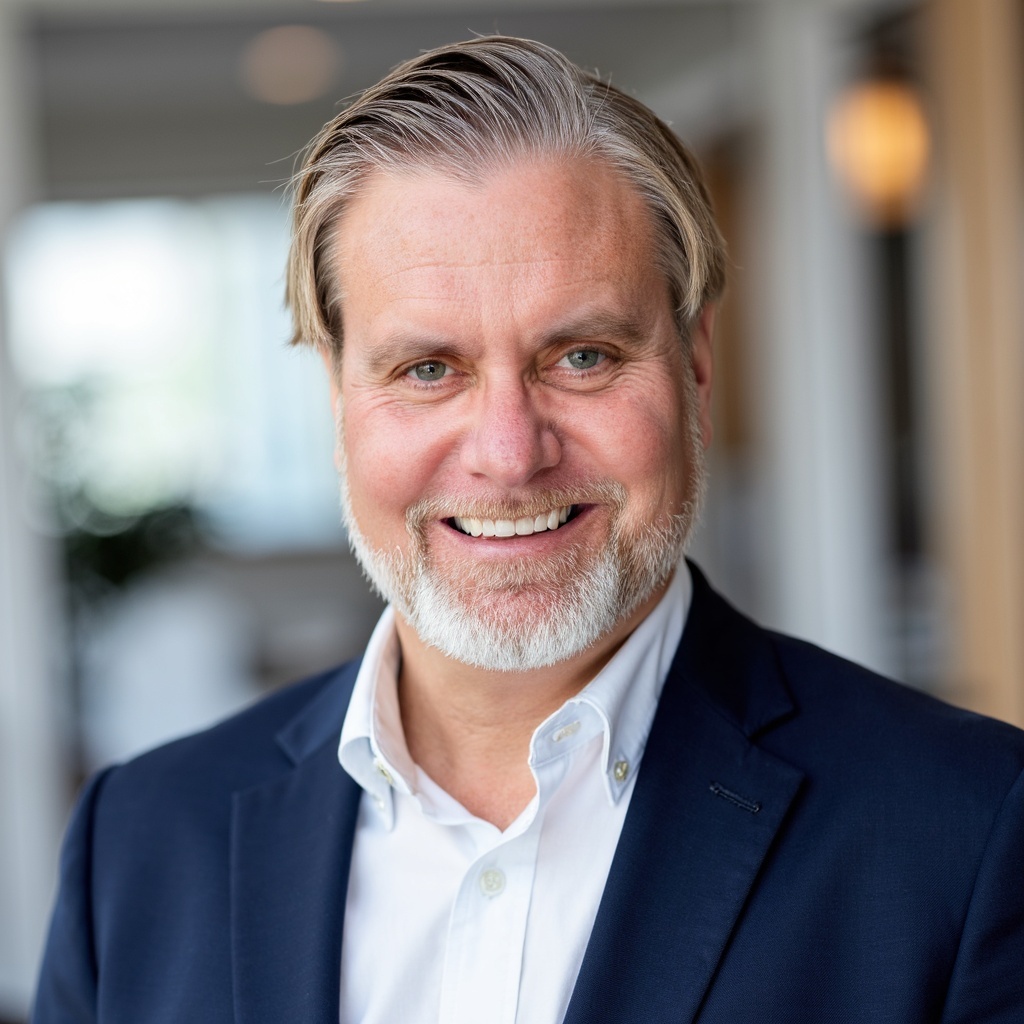
Brett Chappell. Founder, Fullstacked.
I grew up on a dryland pinto bean farm in Goodman Point, Colorado. For years we had no county water. We canned what we grew and filled the freezer with elk and mule deer off our own land. I put in 12-hour days as soon as I was tall enough to push the clutch in on a tractor. That is where the work ethic comes from, and it never left.
I went through BUD/S. Hell Week put me in a hospital bed with cellulitis, and the days I missed rolled me back to class 184. I graduated Honor Man anyway, the first rollback ever to earn it. I did a tour at SEAL Team Eight before leaving for the private sector.
Then a long way around. I sold cars and ran the front end of a dealership, went back to finish the degree I had shelved to serve in the Navy, and a letter from ASU's president about Teach For America changed my direction for good. I have spent the fourteen years since building the people function in schools and scaling organizations the same way I have done everything else. Show up early, hold the standard, build it so it lasts.
I work on a receipts-only standard. Every claim traces to evidence. If you want a motivational deck, there are better firms. If you want a people function that will not quietly break the moment you scale it, I am the call.
Contact.
One way in.
Book a 30-minute call →Or email brett@fullstacked.ai
No contact form. No lead-capture ladder. If the work fits, a conversation is the next step.